Your Trusted Partner for Extruded & Laminated Packaging Tubes | Est. 2004
Leave Your Message
EMILY Cosmetic Tube Packaging Launches Production-Friendly Tube Solution

What Are the Top Glass Cosmetic Jars for Wholesale Buyers?

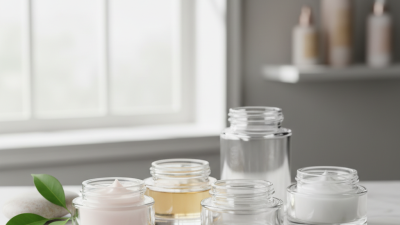
What Are the Top Glass Cosmetic Jars for Wholesale Buyers? The answer depends on product texture, filling speed, shelf presentation, and total delivered cost. A rich face cream needs a wide opening and stable base. A balm may require a smaller jar with a tight, reliable closure. Glass Cosmetic Jars remain popular because they offer a premium appearance, strong chemical resistance, and high recyclability when collection systems are available.

Industry data supports this position. Grand View Research identifies packaging as a major value driver in the global cosmetics market, where premium formats continue to influence purchasing decisions. McKinsey’s report, The Beauty Market in 2023, also forecasts continued growth in beauty and personal care, increasing pressure on brands to combine visual appeal with operational efficiency. Meanwhile, the Ellen MacArthur Foundation emphasizes packaging design that supports reuse and recycling. These findings matter to wholesalers because jar selection affects more than appearance. It influences breakage rates, shipping weight, filling compatibility, and customer perception.

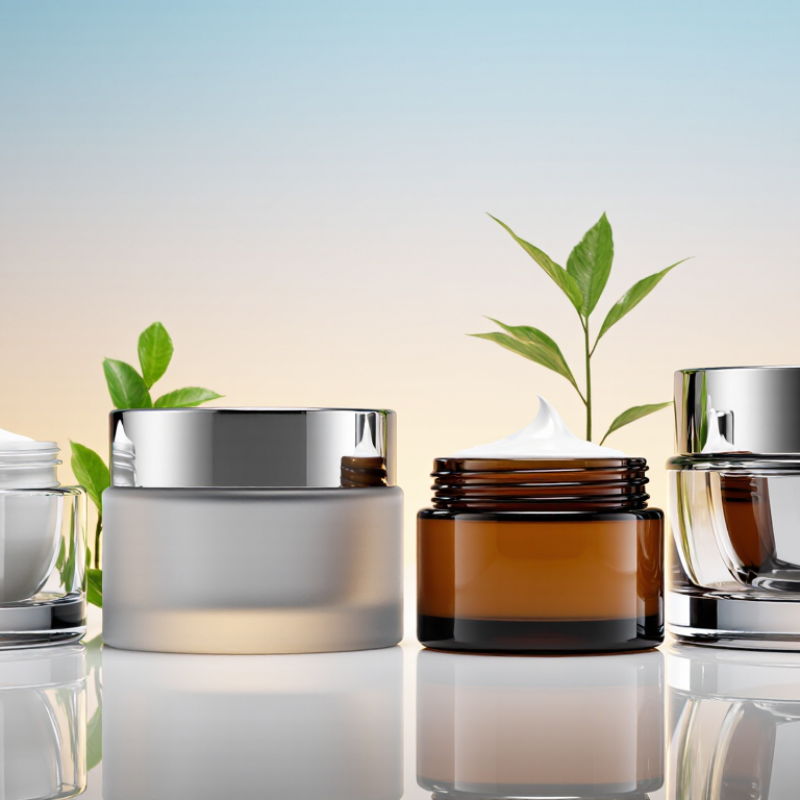
The strongest wholesale options usually include clear glass jars, frosted jars, amber jars, and heavy-base premium designs. Each format has practical trade-offs. Clear glass shows product color beautifully, but light-sensitive formulas may need protection. Amber glass improves light shielding, yet its darker appearance may limit branding choices. Frosted finishes feel elegant, although surface coatings can complicate recycling assessment. There is no universal winner. That is the uncomfortable part. Buyers should compare samples, closure torque, liner performance, carton protection, and batch consistency before placing large orders. This guide examines those details and the reports behind them.
What Are the Top Glass Cosmetic Jars for Wholesale Buyers?

What Makes Glass Cosmetic Jars Suitable for Wholesale Purchasing?

For wholesale buyers, glass cosmetic jars offer a dependable balance of appearance, protection, and product compatibility. Their rigid walls resist dents, helping cartons reach retailers with a consistent presentation. A clear jar also lets customers see the cream’s color and texture before purchase. That visual confidence matters on crowded shelves.

Glass suits many creams, balms, masks, and serums because it generally creates a stable barrier against moisture and outside odors. Still, compatibility should never be assumed. Use a sample.

Fill it. Seal it. Observe changes.

Professional purchasing teams usually test the formula inside the selected jar. They check odor, color, texture, leakage, and closure performance over time. This practical step can reveal problems that a catalog photograph will hide. Jar weight, neck size, lid fit, and filling speed also affect wholesale efficiency. Small differences can slow production.

Glass cosmetic jars are not perfect. They weigh more than plastic containers and may break during careless transport. Protective dividers, stronger cartons, and drop testing can reduce those risks. Buyers should request consistent specifications for capacity, wall thickness, decoration, and packaging. Clear records improve repeat orders. They also make supplier discussions more precise.

A well-chosen jar supports a professional shelf image, reliable filling, and easier quality control. Yet the cheapest unit price may not deliver the lowest total cost. Shipping weight, breakage, testing, and rejected goods deserve careful calculation before placing a large order.

Which Types of Glass Cosmetic Jars Meet Different Product Needs?

Wholesale buyers need glass cosmetic jars that match the formula, dispensing method, and customer experience. Clear glass suits creams, body butters, and products where color matters. It lets shoppers see texture and fill level. Amber or violet-toned glass offers better protection for light-sensitive ingredients. However, tinted glass can hide color changes during quality checks. That trade-off deserves attention.

Frosted glass creates a soft, premium appearance and reduces visible fingerprints. It works well for facial creams and overnight masks. Wide-mouth jars allow easy access to thick scrubs, clay masks, and balm formulas.

Narrower openings help limit unnecessary contact with the product. A liner inside the closure can improve sealing and reduce leakage during transport. Small capacities suit trial sizes, while larger jars support salon or household use.

Thick-wall glass feels stable in the hand and resists minor handling stress. It also increases shipping weight. That affects freight costs and breakage risk. I would not approve a large order from appearance alone. Buyers should test the jar with the actual formula, closure, label adhesive, and filling temperature. Check odor retention, leakage, thread fit, and repeated opening. A beautiful jar may still be unsuitable. Packaging evaluations sometimes reveal small flaws, such as a lid that becomes difficult to turn after exposure to oil. Suppliers should provide samples, dimensional data, and consistent inspection records before production.

How to Evaluate Jar Materials, Sizes, Shapes, and Closures

For wholesale buyers, the best glass cosmetic jars balance protection, usability, and production efficiency. Material selection deserves careful attention. Soda-lime glass suits many creams, masks, and balms. Borosilicate glass offers stronger thermal resistance, but it may increase purchasing costs. Ask for information about glass grade, wall thickness, annealing, and surface quality. Small bubbles or uneven rims can create filling and sealing problems.

Size should match the formula and customer habits. Common capacities range from 5 ml sample jars to 100 ml treatment jars. Leave enough headspace for filling and smooth application. Oversized jars can make a small formula look inefficient. That affects perceived value. Shape also matters. Wide-mouth jars help users reach thick creams with a fingertip or spatula. Tall, narrow jars save shelf space but may waste product near the bottom. Test both in real handling conditions.

Closures need more than attractive appearance. Check the neck finish, liner material, thread accuracy, and opening torque. A secure lid should resist leakage without becoming difficult to remove. For sensitive formulas, request compatibility testing with the inner liner and decoration. Inspect several production samples, not just one approved piece. Wholesale cartons can reveal problems that showroom samples hide. I once underestimated the effect of a slightly warped lid; it caused uneven sealing during filling. That experience changed my evaluation process. Reliable suppliers should provide drawings, inspection standards, sample approval, and traceable batch information. Even then, repeat testing remains worthwhile.

What Are the Top Glass Cosmetic Jars for Wholesale Buyers? - How to Evaluate Jar Materials, Sizes, Shapes, and Closures

Glass Material / Finish Common Nominal Sizes Suitable Shapes Recommended Closure Key Advantages Main Limitations Wholesale Evaluation Points Best-Fit Product Types
Clear soda-lime glass
Transparent, standard finish
5 ml, 15 ml, 30 ml, 50 ml, 100 ml Round, straight-sided, square, low-profile PP or ABS screw cap with liner; optional inner disc Shows product color and fill level; widely available; generally cost-effective; recyclable Provides limited protection from ultraviolet and visible light; heavier than plastic Check glass clarity, wall thickness, rim finish, weight consistency, and carton protection Creams, gels, scrubs, masks, balms, and transparent formulas
Amber glass
Brown or dark amber finish
15 ml, 30 ml, 50 ml, 100 ml Round and straight-sided; usually cylindrical PP screw cap, phenolic-style cap, or lined aluminum cap Provides substantially better light protection than clear glass; premium natural-product appearance Reduces visibility of the formula; color can vary between production batches Confirm light-transmission requirements, amber color consistency, and closure compatibility Essential oils, botanical creams, vitamin products, and light-sensitive formulations
Violet or tinted glass
Decorative colored finish
30 ml, 50 ml, 100 ml Round, low-profile, and squared cosmetic forms Lined screw cap with optional inner seal Distinctive shelf appearance; can provide partial spectral light filtering depending on glass composition Usually higher cost; light-protection performance must be verified rather than assumed Request light-transmission data, coating durability tests, and color approval samples Premium creams, masks, botanical blends, and limited-edition packaging
Frosted glass
Acid-etched or coated surface
15 ml, 30 ml, 50 ml, 100 ml Round, square, oval, and low-profile jars PP, ABS, or aluminum screw cap; use a liner for improved sealing Soft-touch visual effect; conceals minor formula color variation; premium appearance Surface treatment may scratch, mark, or wear; not automatically light-protective Test rub resistance, coating adhesion, decoration durability, and compatibility with oils and alcohols Facial creams, night creams, body butters, and premium skincare lines
Opal or white glass
Opaque or semi-opaque finish
30 ml, 50 ml, 100 ml Round, square, and wide-mouth low-profile jars Lined PP or ABS screw cap; optional tamper-evident inner seal Clean, uniform appearance; hides formula color; supports a minimalist presentation Fill level is difficult to see; opacity and light protection vary by construction Verify opacity, surface uniformity, color matching, and actual light-transmission performance Moisturizers, brightening creams, clay masks, and spa products
Thick-wall glass
Heavy base and reinforced appearance
30 ml, 50 ml, 75 ml, 100 ml Round, square, and luxury low-profile designs Metal-look, aluminum, PP, or ABS screw cap with liner High-end feel; stable on shelves; suitable for refillable or gift-oriented packaging Higher shipping weight; increased freight cost; requires stronger protective packaging Compare tare weight, breakage rate, pallet efficiency, and total delivered cost Luxury skincare, gift sets, professional spa products, and refill systems
Standard-mouth jar
Typical screw-finish opening
15 ml, 30 ml, 50 ml, 100 ml Round and square jars with moderate shoulder height Continuous-thread screw cap with gasket or liner Good balance of seal performance, usability, decoration space, and component availability Less convenient for thick products than a wide-mouth design Match neck finish, thread profile, liner material, torque range, and cap application method Lotions, light creams, serums in gel form, and emulsions
Wide-mouth jar
Large opening for easy access
30 ml, 50 ml, 100 ml, 200 ml Low-profile round, square, and rectangular forms Screw cap with inner disc, foil seal, or plug-style liner Easy filling and consumer access; suitable for dense and particulate products Greater product exposure during use; sealing and contamination control require attention Conduct leak, evaporation, microbial-barrier, and repeated-open/close testing Body scrubs, cleansing balms, thick masks, salts, and body butters
Low-profile jar
Short body with broad footprint
30 ml, 50 ml, 100 ml, 150 ml Round, oval, square, and rectangular Wide-mouth screw cap with liner or inner disc Stable for display; easy to scoop; offers a broad area for labels and decoration Uses more shelf footprint; broad sealing surfaces may require careful torque control Review shelf efficiency, label dimensions, pallet arrangement, and cap-to-jar alignment Masks, scrubs, solid perfumes, balms, and travel-friendly products
Tamper-evident configuration
Glass jar with added security seal
30 ml, 50 ml, 100 ml, 200 ml Round and square jars with compatible neck finishes Breakable ring, foil induction seal, shrink band, or inner plug Helps show whether the package has been opened; supports distribution and consumer confidence Adds components, equipment requirements, and validation steps; not a substitute for sterile processing Confirm seal integrity, application settings, removal performance, and compatibility with the formula Retail skincare, online orders, professional-use products, and export shipments
Wholesale buyer checklist: Confirm nominal capacity versus brimful capacity, neck finish, closure torque, liner compatibility, glass weight, breakage testing, decoration durability, shipment packaging, regulatory documentation, and total delivered cost before placing a bulk order.

What Quality Standards Should Wholesale Buyers Check?

Wholesale buyers should treat glass cosmetic jars as tested packaging, not decorative containers.

Check the glass type, wall thickness, weight tolerance, and closure fit for every production lot. Type III soda-lime glass suits many creams, masks, and balms. Type I borosilicate glass offers stronger chemical resistance, but it usually costs more. Ask suppliers for batch records, inspection results, and traceability documents.

The closure must match the jar precisely. Inspect liners, threads, inner seals, and torque performance. Run leakage tests after filling, then repeat them after heat and cold exposure. ASTM D4169 transport testing can reveal failures caused by vibration, compression, and repeated drops. ISO 2859-1 sampling also helps buyers define acceptable defect levels.

Watch for bubbles, black specks, sharp rims, uneven bases, and coating cracks. Visual inspection alone feels reassuring, but it misses microscopic stress.

Packaging sustainability also needs measurable evidence. FEVE industry reporting states that increasing cullet by 10% can reduce furnace energy use by about 2.5% and carbon emissions by roughly 5%. Request recycled-content percentages and supporting declarations, rather than accepting vague “eco” claims. A 2023 Smithers packaging outlook highlights rising demand for premium, recyclable formats, yet quality cannot become secondary.

No checklist is flawless. In practice, buyers should test filled jars with their actual formula, pump, label, and shipping carton before approving a large order.

How to Compare Suppliers, Pricing, Customization, and Order Terms

What Are the Top Glass Cosmetic Jars for Wholesale Buyers?

Wholesale buyers should compare more than the jar’s advertised price. Ask suppliers for glass specifications, neck sizes, closure compatibility, and product samples. A 50 ml jar may look identical online, yet its inner diameter can affect filling speed and lid fit. Check wall thickness, surface defects, color consistency, and leakage after repeated opening. Request a recent production sample, not only a showroom piece.

Pricing should show every cost clearly. Compare unit prices at different quantities, mold charges, decoration fees, packaging, and shipping terms. A cheaper jar can become expensive after custom frosting or additional protective cartons. Review minimum order quantities and price breaks. Also ask whether replacement units cover breakage during transit. Small details matter.

Customization may include tinting, frosting, printing, embossing, or custom lids. Confirm artwork limits, color references, sample approval, and production tolerance before paying a deposit. For order terms, record lead time, payment stages, inspection procedures, and responsibility for delays. A written specification protects both sides. I once underestimated carton strength when comparing suppliers, and several jars arrived chipped. That mistake changed my evaluation sheet. Supplier communication also deserves a score. Fast replies are useful, but accurate replies matter more. Ask difficult questions early.

Top Glass Cosmetic Jar Buying Criteria for Wholesale Buyers

A 100-point evaluation model for comparing suppliers, pricing, customization, and order terms.

Product quality and compliance receive the highest weighting because they directly affect safety, consistency, and market acceptance. Landed price, minimum order quantity, customization capability, lead time, packaging protection, and communication should then be assessed before placing a wholesale order.