What Are the Top Plastic Bottles for Wholesale Buyers?
Choosing Plastic Bottles for wholesale is not just a matter of finding the lowest unit price. A bottle must suit its product, filling line, storage conditions, and customer expectations. A lightweight PET bottle may work well for a clear beverage, while a sturdy HDPE container can better suit household or personal-care products. Small details matter. Check the neck finish, cap fit, wall thickness, and label area before requesting a large order. A sample in your hand often reveals more than a product photo.
Wholesale buyers should also compare practical supplier details: available capacities, minimum order quantities, customization options, lead times, and shipment packaging. Ask how samples are tested and whether specifications can be documented consistently across production runs. A low quote can look attractive, but freight, damaged units, or mismatched closures may change the real cost. Not glamorous, but important. This guide explores bottle styles, materials, and sourcing questions that help buyers narrow their choices with evidence rather than guesswork. No single bottle is best for every application. Even careful planning can miss something, so test the bottle with the intended product and closure before committing to volume. That modest step can prevent an expensive surprise.
Classify Wholesale Bottle Options: PET, HDPE, PP, and Their Uses
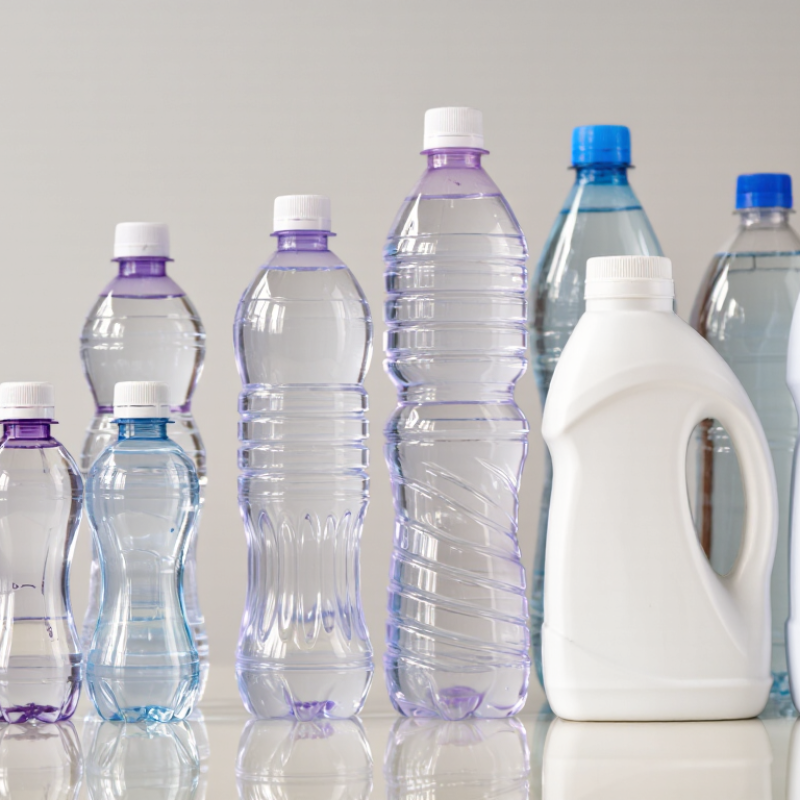
PET is often chosen for clear bottles holding water, juice, or personal-care liquids. Its transparency makes fill level and color easy to see, and its low weight can help reduce shipping load. It can be a poor fit when a product needs high heat resistance. Check the intended filling temperature.
HDPE is commonly used for opaque bottles containing household cleaners, shampoos, and other everyday liquids. It offers useful impact resistance, and its slightly flexible walls can tolerate handling during transport. The surface feels less glossy than PET. That distinction matters.
PP is often selected for smaller containers, wide-mouth packs, and closures because it handles more heat than many common bottle plastics. Actual limits depend on the bottle design and grade.
For wholesale buyers, compare more than resin type. Match bottle shape, neck finish, wall thickness, and closure to the filling line and product. A narrow neck may pour neatly, but it can slow filling. Request samples and test them with the actual contents, caps, and shipping conditions. One assumption worth revisiting: “recyclable” does not mean accepted everywhere. Local collection systems and package design affect recovery, so confirm those details before ordering large volumes.
Compare Resin Densities: PET at 1.38–1.40 vs. HDPE at 0.94–0.97 g/cm³
What Are the Top Plastic Bottles for Wholesale Buyers?
Resin density offers a useful starting point for comparing plastic bottles. PET typically measures 1.38–1.40 g/cm³, while HDPE falls around 0.94–0.97 g/cm³. PET’s higher density does not automatically make every PET bottle heavier. Bottle weight also depends on wall thickness, shape, and capacity. A thin-walled sample can surprise you.
PET is often chosen when clear product visibility matters. Its stiffness can also suit bottles designed for beverages, provided the package meets the product’s performance needs. HDPE is lighter by resin density and commonly used for opaque containers. It can handle everyday bumps, but compatibility with the contents still needs checking. Density alone is a shortcut. That shortcut can mislead.
Tips: Compare complete bottles, not just resin figures. Weigh samples at the same capacity, then inspect the base, shoulder, and neck finish. Ask suppliers for material specifications and test bottles with your actual filling process. A small trial is worthwhile; I would not skip it, even when the numbers look convincing.
Check Food-Contact Rules: FDA 21 CFR 177.1630 for PET and 177.1520 for Olefins
What Are the Top Plastic Bottles for Wholesale Buyers?
A bottle that looks sturdy may still be a poor fit for its contents. Wholesale buyers should match resin, wall thickness, closure, and filling conditions to the product. For PET bottles, review FDA 21 CFR 177.1630. For olefin plastics, including many polyethylene and polypropylene materials, review 21 CFR 177.1520. These rules include requirements and use conditions; a resin name alone does not prove that a finished bottle suits every food or beverage.
Ask the supplier for documentation covering the exact bottle formulation, intended food type, and conditions of use, such as hot filling or repeated use. Check that the closure and any liner are included in the assessment. A bottle may perform well with cold water but soften or deform under heat. Where needed, request relevant migration or performance test results. Do not treat a general “food-grade” statement as a complete compliance review. Details matter, and documentation can be incomplete.
Tips: Before ordering in bulk, request samples and test them with your actual product and filling process. Check for leaks, odor transfer, paneling, and cap fit. Keep the paperwork tied to the specific bottle and supplier. It is easy to miss a small change in resin or closure; that detail can change the assessment.
Assess Recyclability: NAPCOR Reports a 33% U.S. PET Bottle Recycling Rate for 2022
For wholesale buyers, a bottle’s material matters beyond price and appearance. NAPCOR reported a 33% U.S. PET bottle recycling rate for 2022. That figure describes a real-world outcome, not a guarantee that every bottle will be recycled. Collection access, sorting equipment, and local processing all affect what happens after use.
PET remains a practical option for many beverage and personal-care products because it is lightweight and widely collected. Buyers can make recycling easier by favoring clear, uncolored bottles and labels that do not cover large areas. A compatible cap and label can also help sorting facilities identify the package. Small choices matter. Yet packaging design alone cannot fix gaps in collection systems.
Ask suppliers for material specifications and test bottles with the intended contents before placing a large order. Check whether labels separate cleanly and whether the bottle stays clear after handling. A glossy finish may look better on a sample, then become scratched in transit. That is worth questioning. Compare the quoted cost with packaging weight, durability, and local recycling access, rather than treating “recyclable” as a complete answer.
Top Plastic Bottles for Wholesale Buyers: Assess Recyclability
NAPCOR reported that 33% of U.S. PET bottles were recycled in 2022. This rate offers wholesale buyers a recycling benchmark when evaluating PET packaging; actual recycling outcomes depend on local collection and sorting systems.
Source: NAPCOR, 2022 PET Recycling Report.
Select Wholesale Specs: Capacity, Neck Finish, Closure, MOQ, and Unit Cost
Wholesale bottle selection starts with the product and filling line. Choose capacity by usable fill volume, headspace, and shelf footprint; a 500 mL bottle may suit a single-serve drink, while a 1 L format changes case weight and freight. Grand View Research estimated the global plastic bottles market at USD 146.4 billion in 2023, underscoring how many formats compete for buyers’ attention. The figure is useful context, not a reason to buy the cheapest option. Check resin, wall thickness, and sample performance before approving a run.
Match the neck finish to the closure and dispensing need. A 28 mm finish may work for a common beverage cap, but confirm thread compatibility with the actual cap supplier. For oils or personal-care products, test liners, seals, and leak resistance with the filled product. Ask suppliers to quote MOQ and unit cost at several order quantities, including freight and decoration. A low unit price can hide high setup fees or excess inventory. Even experienced buyers miss this sometimes.
Tips: Request samples from the production mold, then test filling, capping, squeezing, and transport. Compare cost per usable bottle, not just the quoted piece price. Record capacity, neck finish, closure, MOQ, and lead time in one spec sheet before requesting final quotes.
Related Posts
-
2026 Top Types of Plastic Bottle Packaging for Global Buyers
-

2025: How to Recycle Plastic Bottles Effectively for a Greener Future
-

Best Plastic Bottles at China Import and Export Fair 2026?
-

Top 5 Plastic Bottle Containers to Explore at 2026 Canton Fair?
-
Top 2026 Trends in Plastic Bottles for Global Buyers?
-
What Are the Best Plastic Bottles for Eco-Friendly Packaging?