Top 10 Types of Plastic Bottle Containers for Buyers
Choosing among the Top 10 Types of Plastic Bottle Containers is not just a matter of shape. Buyers must match material, capacity, closure, and dispensing style to the product and its everyday use. A clear PET bottle can make liquid visible on a bright retail shelf. A sturdy HDPE container may suit a thicker product or repeated handling. Small details matter: a cap that twists smoothly, shoulders that pour cleanly, and walls that resist denting during shipment.
Packaging decisions also affect storage, filling, transport, and customer experience. Circular-economy thinker William McDonough’s phrase “Waste Equals Food” offers a useful lens for considering material recovery and design. It is a principle, not a promise that every bottle will be recycled. Buyers should check local collection realities and ask suppliers about resin, recycled content, barrier performance, and compatibility with filling equipment. Practical testing beats assumptions.
There is no universal best bottle. Not even close. The right choice depends on the product’s viscosity, sensitivity, shelf life, and target market. A narrow-neck bottle may control pouring, yet slow down filling. A lightweight container can reduce material use, but may feel less robust in a customer’s hand. These trade-offs deserve attention before an order is placed. The guide that follows compares ten common container types, highlighting their strengths, limitations, and likely applications. Use it as a starting point, then confirm specifications with your packaging supplier and test samples under real handling conditions. A sample on a desk can look perfect. A full case in transit may tell a different story.
The Basic Structure and Function of Plastic Bottle Containers
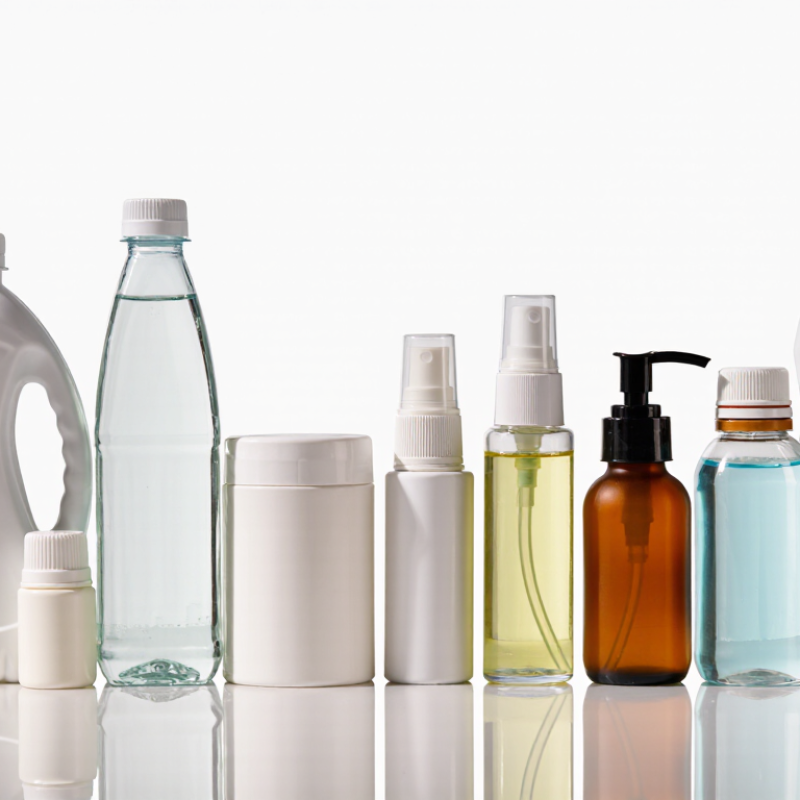
A plastic bottle container has several parts that work together. The body holds the product, while the shoulder guides it toward the neck. The neck supports a cap or dispensing closure, and its threads must match the closure closely to reduce leaks. The base helps the bottle stand upright and handle filling pressure. Small details matter. A narrow neck can control pouring, while a wide opening makes filling and cleaning easier. Wall thickness also affects weight, stiffness, and how the bottle feels in the hand.
The chosen plastic shapes performance. Some materials offer clarity and impact resistance; others provide better protection from moisture or light. The right choice depends on the contents, storage conditions, and expected handling. Compatibility testing is essential: a liquid can soften, stain, or stress a container over time. A sample that looks fine on a desk may behave differently after transport or repeated squeezing. Designers can still overlook how labels, closures, and bottle walls interact. That deserves another look. Checking filled samples for leaks, standing stability, and dispensing behavior can reveal problems before production scales up.
Common Plastics Used to Make Bottle Containers
Plastic bottle performance depends on the resin, bottle shape, and what the container will hold. PET is clear and lightweight, making it common for water and soft-drink bottles. It can provide useful gas barriers, though heat tolerance depends on the specific grade and design. HDPE is usually opaque and more rigid. It suits containers for milk, household liquids, and personal-care products because it resists many everyday chemicals.
PP tolerates warmer filling conditions than many common bottle plastics, but performance still varies by grade. It is often used for bottles, jars, and closures. LDPE feels softer and squeezes easily, which helps with flexible dispensing bottles. PVC and polycarbonate also appear in some container applications, but their suitability depends on product contact, processing, and local requirements. A resin name alone is not enough. That shortcut is tempting, but incomplete.
Check the contents, storage temperature, required clarity, and whether the bottle must resist squeezing or impact. A clear wall does not prove chemical compatibility. Ask for material specifications and test the finished container with the actual product, especially if it may sit in a warm vehicle or warehouse. Recycling acceptance also varies by location and package design. Small details matter: the cap, label, color, and bottle thickness can affect handling and recovery. I would not choose by resin code alone.
Ten Popular Plastic Bottle Container Types
Buyers often choose a bottle by how it pours, seals, and feels in the hand. Ten popular plastic bottle container types are narrow-neck bottles for liquids, wide-mouth bottles for powders, squeeze bottles for controlled dispensing, spray bottles for fine mist, and pump bottles for measured doses. Dropper bottles suit small-volume applications. Foaming bottles mix liquid with air. Sports bottles offer quick access while moving. Refillable bottles support repeated use, while jerrycans handle larger volumes. The list sounds tidy, but actual suitability depends on the contents and closure.
Material choice matters too. PET is clear and commonly used for beverage bottles; HDPE is opaque and often selected for sturdier containers. Compatibility still needs testing, especially with oils or concentrated formulas. The OECD’s Global Plastics Outlook (2022) estimates that packaging accounted for 40% of global plastic waste generated in 2019. That figure covers packaging broadly, not bottles alone. A useful purchasing check is whether the container can be emptied easily, uses a compatible closure, and fits the intended filling line. Small details count. A bottle that looks right on a sample shelf may be awkward to grip when wet, or difficult to recycle because of mixed components.
How Bottle Shapes and Closures Suit Different Products
Bottle shape should follow how a product is poured, stored, and used. A narrow-neck bottle helps control water or dressing flow, while a wide mouth suits thicker liquids and makes filling easier. Round bottles roll readily, but their curved walls can leave gaps on a shelf. Square bottles pack closely, yet sharply tapered shoulders may waste some of that space. This is easy to overlook. Fit matters.
Closures complete the design. Screw caps support repeated opening; flip-tops allow one-handed dispensing, and pumps work best when the product flows consistently. Match the closure to the bottle’s neck finish and the product’s thickness. A mismatched pump can leave product behind. NAPCOR’s 2023 PET Recycling Report put the U.S. PET bottle recycling rate at 33%, while the OECD’s Global Plastics Outlook estimated that only 9% of global plastic waste was recycled in 2019. These figures describe different scopes, but both underline why material choices deserve attention. A bottle’s shape alone does not determine recyclability: closure materials, labels, and sorting systems matter too. I would test a filled sample on an actual shelf and in real use; drawings can make an awkward grip look perfectly fine.
Top 10 Plastic Bottle Container Types: Common Closure Finish Diameters
A comparison of common nominal bottle-neck finish diameters, with example container applications.
The values show nominal finish diameters in millimeters. The container examples are illustrative, not fixed pairings: actual closure choice depends on the bottle’s specified neck finish, product, and dispensing needs.
Key Factors Buyers Should Compare When Choosing a Bottle
When comparing plastic bottle containers, start with the product, not the shape. Water, oils, and cleaning liquids place different demands on a bottle. Check material compatibility, wall thickness, capacity, and neck finish against the filling line and closure. A cap that feels secure by hand may still leak after vibration or temperature changes. Request samples and test filled bottles for leaks, drop resistance, and shelf appearance. Small trials help.
Compare weight and dimensions with shipping needs, storage space, and how customers dispense the contents. Clear walls make fill levels easy to see, but light-sensitive products may need tinted or opaque packaging. Check whether labels adhere well and whether the bottle remains easy to squeeze across production batches. There is no perfect bottle. A lighter design may use less material, yet dent more easily in transit; the trade-off deserves a real test.
Tips: Measure the neck finish, test your actual closure, and compare bottles after filling. Record any leaks, paneling, or label lifting. A single sample is useful, but it cannot reveal every batch variation.
Top 10 Types of Plastic Bottle Containers for Buyers - Key Factors Buyers Should Compare When Choosing a Bottle
| Bottle Type / Material | Typical Uses | Key Advantages | Limitations to Compare | Buyer Checks |
|---|---|---|---|---|
| PET (Polyethylene Terephthalate) | Water, soft drinks, juices, edible oils, and personal-care products | Clear, lightweight, and widely used for carbonated beverages; suitable grades provide useful gas and moisture protection. | Not generally intended for hot-fill or high-temperature use unless specifically designed for it; performance depends on bottle design and resin grade. | Confirm pressure rating, shelf-life needs, food-contact compliance, closure compatibility, and local PET recycling acceptance. |
| rPET (Recycled PET) | Beverage, household, and personal-care packaging where recycled content is desired | Can incorporate recycled PET and often uses familiar bottle designs and filling processes. | Color, clarity, and material consistency can vary; food-contact use is subject to applicable regulations and approved recycling processes. | Specify recycled-content percentage, traceability, color limits, food-contact documentation, and local collection requirements. |
| HDPE (High-Density Polyethylene) | Milk, detergents, shampoo, household cleaners, and some food products | Tough, lightweight, and resistant to many water-based chemicals; commonly made in opaque or translucent formats. | Usually less transparent than PET and provides limited oxygen protection compared with dedicated barrier structures. | Check chemical compatibility, odor or flavor requirements, wall thickness, closure seal, and local HDPE recycling access. |
| LDPE (Low-Density Polyethylene) | Squeeze bottles for sauces, condiments, personal care, and some laboratory products | Flexible and easy to squeeze; useful when controlled dispensing is important. | Less rigid than HDPE and generally offers limited gas and aroma barrier protection. | Test squeeze force, recovery, leakage, product compatibility, and whether local programs accept the bottle format. |
| PP (Polypropylene) | Food, personal-care, and selected chemical bottles; often used for closures and dispensing components | Good chemical resistance and higher heat tolerance than many common bottle plastics, depending on grade and design. | Can be less clear than PET, and heat suitability should not be assumed from the resin name alone. | Verify the intended filling temperature, sterilization method, resin grade, impact performance, and local recycling options. |
| PVC (Polyvinyl Chloride) | Selected packaging applications, including some specialty liquid products | Can be made rigid or flexible, and certain grades offer useful clarity and chemical resistance. | Acceptance in bottle recycling streams is limited in many locations; additives and regulatory requirements need careful review. | Check regional restrictions, additive disclosures, product compatibility, and the availability of a practical end-of-life route. |
| PC (Polycarbonate) | Reusable water bottles and selected durable, transparent containers | Clear and impact-resistant; can be used in durable bottle designs. | Some polycarbonate is made using BPA-based chemistry, and regulations or market requirements differ by region. | Review composition and compliance documentation, intended reuse and washing conditions, and any BPA-related requirements. |
| PETG (Glycol-Modified PET) | Clear personal-care, cosmetic, and specialty product bottles | Offers clear presentation and good impact resistance for many packaging designs. | May not be accepted in standard PET bottle recycling streams because it can affect recycled PET quality. | Confirm chemical compatibility, filling conditions, labeling requirements, and acceptance by the intended recycling system. |
| PLA (Polylactic Acid) | Selected cold-fill beverage and food packaging applications | Can be made from renewable feedstocks and may be industrially compostable in suitable facilities and conditions. | Heat tolerance is limited for many grades; it is not necessarily home-compostable and is generally unsuitable for conventional PET recycling. | Check certified end-of-life claims, local composting access, filling temperature, shelf-life needs, and clear disposal instructions. |
| Multilayer Co-Extruded Barrier Bottle | Oxygen-sensitive foods, sauces, and products requiring enhanced aroma or gas protection | Combines different polymer layers; barrier layers such as EVOH can improve oxygen protection in suitable structures. | Multiple materials can make sorting and recycling more difficult; barrier performance depends on the complete layer design. | Request layer composition, shelf-life test data, food-contact documentation, and confirmation that local recyclers can process the structure. |
Material performance varies by resin grade, bottle geometry, wall thickness, closures, processing, and intended use. Confirm product-specific testing and local regulatory and recycling requirements before selection.
Related Posts
-
Why Choose Plastic Bottle Containers for Your Storage Needs?
-

Best Plastic Bottles at China Import and Export Fair 2026?
-
Top 2026 Trends in Plastic Bottles for Global Buyers?
-
China Top Plastic Bottle Packaging Manufacturers?
-
How to Recycle Plastic Bottles Effectively?
-
2026 Top Types of Plastic Bottle Packaging for Global Buyers