How to Choose the Right Lotion Tubes for Your Skincare Products
In the rapidly evolving skincare industry, selecting the appropriate packaging for products is becoming increasingly crucial. Among the various options available, "Lotion Tubes" have emerged as a preferred choice for many brands due to their convenience, functionality, and aesthetic appeal. According to industry reports, the global skincare packaging market is expected to reach a value of over $33 billion by 2026, with a significant portion attributed to tube packaging. This growth is driven by consumer demand for innovative and sustainable packaging solutions that enhance user experience while preserving product integrity.
The effective use of Lotion Tubes can significantly influence a brand’s market performance. Recent studies indicate that consumers are more likely to choose products that are easy to dispense and store, which is a key feature of lotion tubes. Furthermore, these tubes are often designed with user-friendly features such as flip-top caps and squeezable materials, making them convenient for daily skincare routines. As brands strive to differentiate themselves in a crowded marketplace, understanding the various factors that contribute to the selection of the right Lotion Tubes—such as material composition, design flexibility, and eco-friendliness—becomes imperative for success in this dynamic sector.

Understanding the Importance of Lotion Tubes in Skincare Products
Lotion tubes play a crucial role in the skincare industry, serving not just as containers but also as essential elements in product preservation and usability. According to a report by Grand View Research, the global skincare market is expected to reach a valuation of $189.3 billion by 2025, with packaging emerging as a significant factor influencing consumer purchasing decisions. Lotion tubes, particularly, can enhance user experience by allowing for easy dispensing and protection against contamination, which is vital for maintaining product integrity.
Furthermore, the importance of lotion tubes extends to sustainability trends within the skincare sector. A 2022 survey conducted by EcoFocus Worldwide indicated that over 50% of consumers prioritize eco-friendly packaging. Using biodegradable or recyclable lotion tubes not only appeals to environmentally conscious consumers but also aligns with regulatory expectations regarding sustainability. With advancements in materials science, manufacturers are now able to produce lotion tubes that reduce environmental impact while still meeting the high standards required in skincare formulations. Thus, the choice of lotion tubes directly impacts both product effectiveness and brand perception in a rapidly evolving market.
How to Choose the Right Lotion Tubes for Your Skincare Products - Understanding the Importance of Lotion Tubes in Skincare Products
| Dimension |
Material |
Capacity |
Closure Type |
Usage Type |
| 3 oz |
PET |
90 ml |
Screw Cap |
Travel Size |
| 5 oz |
HDPE |
150 ml |
Flip Top |
Daily Use |
| 8 oz |
Polypropylene |
240 ml |
Pump |
Bulk Use |
| 10 oz |
Acrylic |
300 ml |
Airless Pump |
Cosmetic Use |
| 12 oz |
LDPE |
360 ml |
Spout Top |
Family Size |
Evaluating Different Materials for Lotion Tubes: Pros and Cons
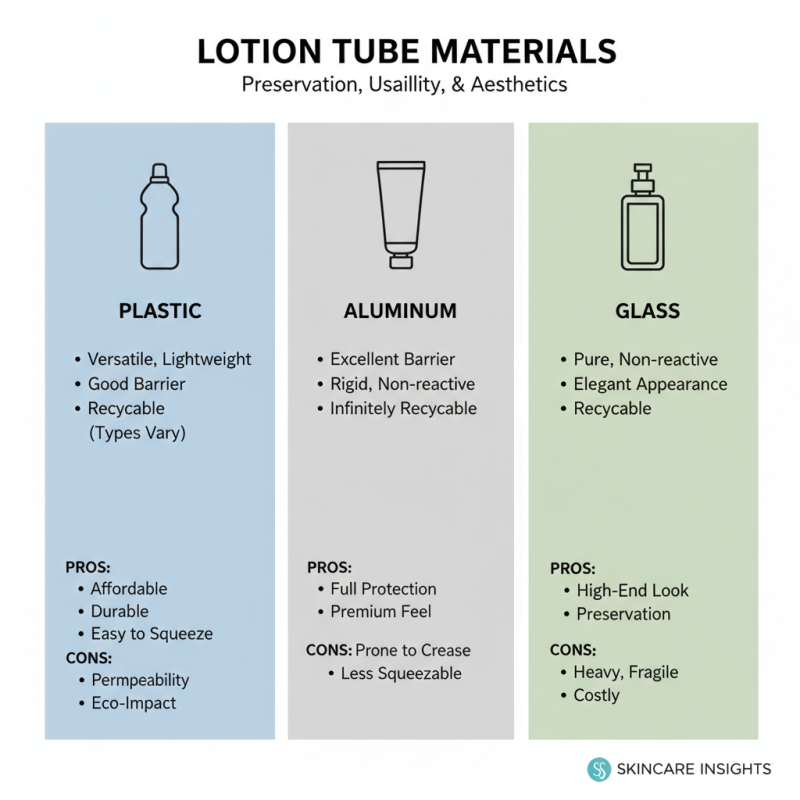
When selecting lotion tubes for skincare products, the choice of material plays a crucial role in product preservation, usability, and aesthetic appeal. The most common materials include plastic, aluminum, and glass, each offering distinct advantages and disadvantages.
Plastic tubes are lightweight and cost-effective, making them a popular choice for many brands. They provide excellent flexibility and can be easily shaped into various sizes and designs. However, concerns about plastic sustainability and the potential for chemical leaching can deter some consumers. In contrast, aluminum tubes are highly recyclable and offer superior barrier properties that protect products from light and air, enhancing shelf life. Despite their benefits, aluminum tubes can be more costly than plastic, and their rigid structure may limit design options.
Glass tubes represent the epitome of luxury packaging, providing an elegant appearance and ensuring product integrity. They are non-reactive, which is ideal for preserving the quality of active ingredients in skincare formulations. However, the heavier weight and higher fragility of glass can pose logistical challenges in terms of shipping and storage. Ultimately, the choice of tubing material requires careful consideration of product formulation, target audience, and brand values to ensure optimal performance and consumer satisfaction.
Key Features to Look for When Selecting Lotion Tubes
When selecting lotion tubes for skincare products, several key features should be considered to ensure that your packaging not only attracts customers but also preserves the integrity of the product. One crucial aspect is the material of the tube—options such as plastic, aluminum, or laminate each offer distinct benefits. According to a recent market study, over 60% of consumers prefer plastic lotion tubes due to their lightweight nature and cost-effectiveness. It's essential to choose materials that offer a barrier against moisture and air to prolong the shelf life of formulations, especially for products containing sensitive ingredients like vitamin C or retinol.
Another important feature is the tube's design, including closure type and dispensing method. Tubes with flip-top caps or nozzles allow for precise application and help to minimize product waste. Data indicates that 75% of skincare users appreciate easy-to-use packaging that permits control over product amount dispensed. Additionally, consider the ease of handling; ergonomic designs can enhance user experience. Incorporating these thoughtful elements into your lotion tube selection not only meets consumer preferences but also demonstrates a commitment to quality and functionality in your skincare line.
Design Considerations: Size, Shape, and Cap Types for Lotion Tubes
When selecting lotion tubes for your skincare products, design considerations such as size, shape, and cap types play a crucial role in both functionality and consumer appeal. According to recent market research, the global skincare packaging market is projected to grow significantly, driven in part by consumer preference for convenient and user-friendly product designs. This emphasizes the importance of choosing the right tube dimensions to cater to varying consumer needs. Lotion tubes typically range from 30ml to 200ml, with smaller sizes being favored for travel or trial purchases, while larger tubes are preferred for daily use.
The shape of the lotion tube is another vital aspect that can influence customer experience. Squeeze tubes are popular due to their ease of use and ability to dispense the product efficiently, reducing waste. Some studies indicate that consumers are increasingly drawn to innovative designs that offer ergonomic benefits, such as contours that fit comfortably in the hand. Additionally, the choice of cap types—whether flip-top, screw-on, or pump—can significantly enhance the product's usability. Research shows that 65% of consumers prioritize cap functionality, particularly when dealing with thicker formulations that require more effort to dispense. By aligning these design elements with consumer preferences, skincare brands can improve user satisfaction and ultimately bolster sales.
Sustainability in Lotion Tubes: Eco-Friendly Options for Skincare Brands
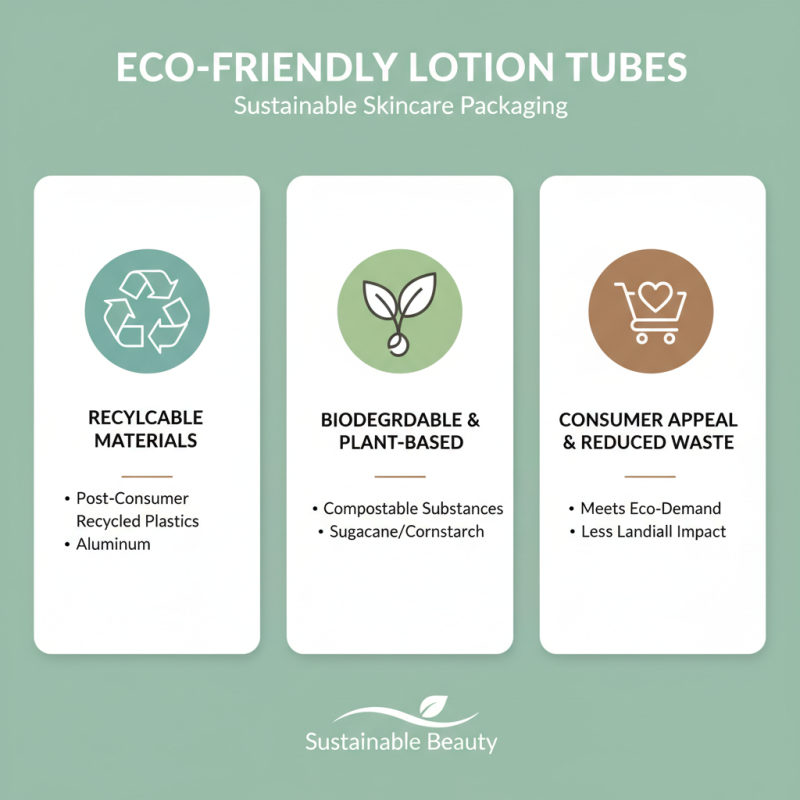
As the beauty industry continues to emphasize sustainability, choosing eco-friendly lotion tubes has become essential for skincare brands. Consumers are becoming increasingly aware of their environmental impact, prompting brands to rethink their packaging options. Sustainable lotion tubes can be made from recyclable materials such as post-consumer recycled plastics, biodegradable substances, or plant-based alternatives. These materials not only reduce waste but also appeal to a growing demographic that values sustainable practices in their purchasing decisions.
In addition to material choices, the design and functionality of lotion tubes can also contribute to sustainability efforts. Brands can implement features such as refillable options or minimalistic designs that use less material. Innovative packaging solutions, such as tubes that are easily separated for recycling, can aid in the lifecycle of the product. By focusing on the sustainability of lotion tubes, brands not only enhance their environmental responsibility but also connect with consumers who prioritize ethical products. Emphasizing these eco-friendly options can serve as a powerful differentiator in the competitive skincare market.