How to Choose the Best Tube Containers for Your Needs?
In today's packaging industry, the choice of tube containers has become increasingly critical. According to market research, the global tube packaging market is projected to reach $8 billion by 2025. Tube containers offer a range of benefits, such as protection from contamination and ease of use. Their versatility makes them suitable for various products like cosmetics, pharmaceuticals, and food items.
However, selecting the right tube container can be challenging. With numerous materials, sizes, and designs available, it’s essential to consider your specific needs. Reports show that over 40% of businesses struggle to choose appropriate packaging solutions. Finding a balance between functionality and aesthetic appeal is necessary.
Retailers often overlook important factors like compatibility with the product and environmental impact. The rise in sustainable packaging demands careful consideration of materials. Some manufacturers are not yet adapting to eco-friendly options. Proper evaluation will lead to better decisions in tube container selection.

Types of Tube Containers Available on the Market
When choosing the best tube containers, it's important to consider the types available on the market. Tube containers come in various shapes and materials. Common options include plastic, metal, and glass tubes. Each type has unique benefits.
Plastic tubes are lightweight and durable. They often come with screw caps or flip lids for easy access. However, they may not be suitable for all substances.
Metal tubes offer a barrier against air and light. They are ideal for products needing longer shelf life. On the downside, they can be heavier and more costly.
Glass tubes are elegant and recyclable. They keep contents fresh but can break easily, requiring careful handling.
Tips: Think about how you will use the tube container. If portability is key, lightweight options are best. Consider the contents too. Some materials may react negatively, altering the product. Test samples if possible. Trying different sizes can help find the perfect fit. A container that looks good is also a plus. Functionality should not be sacrificed for style.
Factors to Consider When Choosing Tube Containers
When selecting tube containers, several factors come into play. The material choice is significant. Different materials offer varied benefits. For instance, plastic is lightweight and cost-effective, yet it may not be as durable as glass. According to a 2022 industry report, the global plastic packaging market size was valued at over $400 billion, indicating high demand.
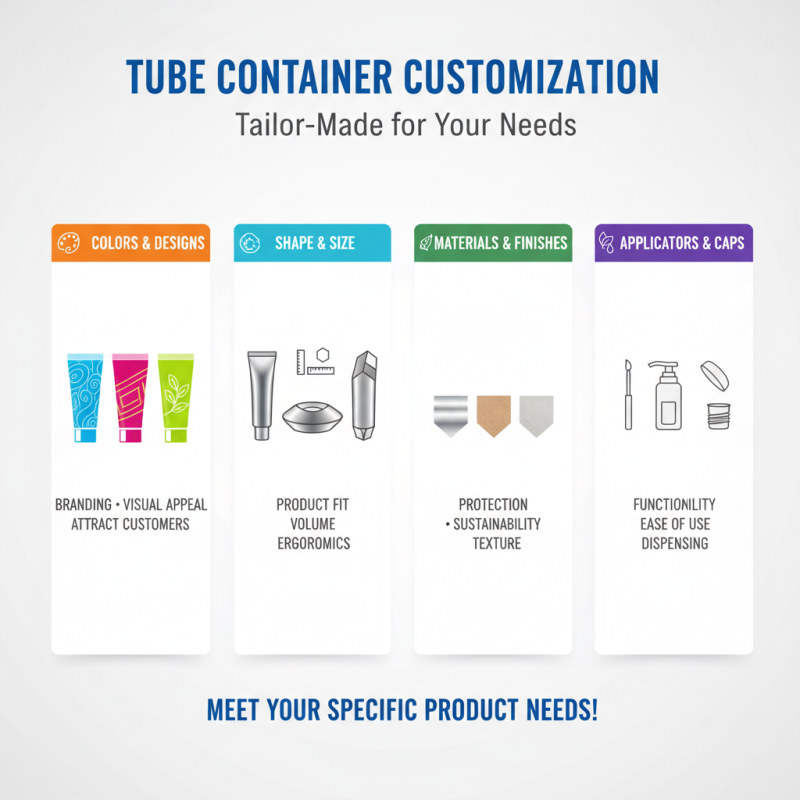
Size and capacity matter too. You should consider the volume of the products you plan to store. If the container is too large, it can waste space; if too small, it may lead to overflows. A survey shows that 70% of businesses prefer customized sizes to optimize storage. This can aid in minimizing waste, which is essential today.
You must also reflect on the designs of tube containers. Functional designs enhance user experience. Ergonomic features can simplify handling and usage. As reported in a 2023 packaging study, 55% of consumers prioritize the ease of use when choosing containers. Focusing on these aspects can greatly improve overall satisfaction.
Material Options for Tube Containers and Their Benefits
When selecting tube containers, the material is a crucial consideration. Common materials include plastic, aluminum, and glass. Each offers distinct advantages. For example, plastic is lightweight and cost-effective. It is also resistant to impact, making it suitable for various applications. Aluminum, on the other hand, provides excellent barrier properties, protecting contents from light and moisture. According to industry reports, aluminum tube containers have a 75% recycling rate, making them more sustainable.
Glass is known for its premium feel and chemical resistance. It's ideal for products requiring longer shelf life. However, glass is heavier and more fragile than other materials. When choosing a tube container, consider the product's nature. Specific formulations may react differently depending on the material used. Understanding these interactions is essential in selecting the right container.
Tips: Always test a small batch of your product in the chosen tube. This can prevent costly errors. Also, consult with suppliers regarding material specifications. They can provide insights into the best choices for your needs, ensuring optimal product safety and quality.
Comparison of Tube Container Materials and Their Benefits
Size and Volume Considerations for Tube Containers
When selecting tube containers, size and volume play a crucial role. The container’s size directly influences its usability. Consider what you intend to store. Is it a small sample or larger quantities? A compact tube is ideal for travel or minimal amounts, while larger tubes are better for bulk items.
**Tips:** Think about the dimensions. Measure the items you plan to store. This will save you from buying the wrong size. You may need to adjust your expectations based on your findings. Sometimes, the ideal container is not the biggest or the smallest.
Volume matters too. Too much space can result in waste, while too little can lead to spills. Aim for a snug fit. Understanding the volume will help you avoid surprises later. You might discover that a medium tube is more versatile than you thought. Consider how you will organize your items, as this can affect your choice.
**Tips:** Visualize how the tube fits into your routine. This may alter your preferences. Don't just focus on aesthetics; practicality matters. Reflect on how often you’d use each container type. A well-selected tube can streamline your process and enhance efficiency.
How to Choose the Best Tube Containers for Your Needs? - Size and Volume Considerations for Tube Containers
| Container Type |
Diameter (cm) |
Length (cm) |
Volume (ml) |
Material |
| Standard Tube |
3.0 |
15.0 |
50 |
Plastic |
| Travel Tube |
2.5 |
10.0 |
30 |
Aluminum |
| Large Capacity Tube |
5.0 |
20.0 |
150 |
Plastic |
| Eco-Friendly Tube |
4.0 |
18.0 |
100 |
Biodegradable |