Your Trusted Partner for Extruded & Laminated Packaging Tubes | Est. 2004
Leave Your Message
EMILY Cosmetic Tube Packaging Launches Production-Friendly Tube Solution

10 Best Cosmetic Tubes for Private Label Brands?

Choosing among the 10 Best Cosmetic Tubes for Private Label Brands requires more than attractive packaging. A tube must protect the formula, support clean dispensing, and fit the brand’s price position. In practical sourcing work, small details often decide whether a launch feels polished. A soft-touch surface can improve grip, while a narrow nozzle may reduce waste during daily use. Yet appearance alone can mislead. A beautiful tube may wrinkle, leak, or react poorly with an active formula.

This guide evaluates Cosmetic Tubes through measurable criteria, including material structure, barrier performance, closure quality, filling compatibility, decoration, minimum order quantity, and total cost. Aluminum, laminate, and plastic tubes each offer different strengths. Some suit oxygen-sensitive creams, while others work better for lightweight lotions or travel products. Airless and conventional formats also create different user experiences. Samples should be filled, stored, squeezed, and inspected before approval. That step sounds basic. It is often skipped.

The selection also considers supplier communication and production consistency. Reliable manufacturers should provide clear specifications, test records, component samples, and realistic lead times. Brands should confirm formula compatibility and applicable packaging requirements in their target markets. No ranking can replace actual validation. A tube that performs well in one climate may behave differently under heat, cold, or repeated handling. The options below are practical starting points, not permanent answers. Private label teams can compare them with honest attention to function, budget, and customer expectations. Even a minor closure flaw deserves a second review.
10 Best Cosmetic Tubes for Private Label Brands?

What Makes a Cosmetic Tube Ideal for Private Label Brands

An ideal cosmetic tube must protect the formula, support efficient filling, and look credible on a crowded shelf.

Grand View Research valued the global cosmetic packaging market at approximately USD 32.7 billion in 2023. It also forecasts steady growth through 2030. That growth raises private label competition.

Material choice matters.

Polyethylene tubes offer flexibility, light weight, and reliable sealing. Aluminum tubes provide stronger barrier protection for oxygen-sensitive formulas. Airless tube designs can reduce product exposure during use. However, they usually cost more and may complicate recycling.

No tube is perfect. A practical choice depends on viscosity, filling equipment, closure style, and expected shelf life.

Cosmetic packaging testing should include leakage, drop, compatibility, and repeated-use trials. Smithers’ sustainable packaging research also emphasizes lightweighting and recyclability as important development priorities.

Tips:

Request samples before placing a production order. Fill them with the actual formula. Store samples under heat and room conditions. Check odor, color, separation, and leakage. Keep the opening clean after daily use. A 2024 consumer packaging survey from McKinsey found that many consumers value packaging sustainability, but price and performance still influence purchasing decisions. Private label buyers should therefore avoid vague environmental claims. Use clear material information instead. Some decoration methods look attractive but hinder recycling. That detail is easy to overlook.

Top Cosmetic Tube Types for Different Product Formulas

Choosing the ten best cosmetic tubes depends on the formula, not appearance alone.

Low-viscosity serums often suit airless tubes because controlled dispensing limits repeated air exposure. Gel products work well in soft polyethylene tubes with narrow, precise nozzles. Lightweight lotions can use laminated tubes that balance flexibility, barrier protection, and attractive printing.

Rich creams need stronger tube walls and wider openings. High-density polyethylene tubes resist dents and provide dependable daily handling. Polypropylene tubes tolerate moderate heat during filling and suit many emulsions.

Aluminum tubes create a premium feel and strong light protection, but they require careful internal coating checks. Dual-chamber tubes can separate two compatible formulas until use. They are useful, though filling complexity increases.

For eye products, small applicator tubes support cleaner, more controlled placement. Foaming formulas may need special valves rather than standard squeeze openings. Recycled-content tubes can support packaging goals, but their color and stiffness may vary between batches. That detail is easy to overlook.

Formula compatibility testing should examine leakage, odor transfer, color change, and dispensing force after storage. In packaging evaluations, I would test the filled tube upside down, under heat, and after repeated squeezing.

A beautiful tube can still fail in the bathroom.

Cap fit matters too. There is no universal best tube.

Key Materials, Closures, and Decoration Options

For private label cosmetics, tube selection starts with material performance, not appearance. Mordor Intelligence estimates the global cosmetic packaging market will grow from about USD 32 billion in 2024 to over USD 40 billion by 2029. That growth increases pressure for lighter, recyclable formats.

Polyethylene tubes offer flexible squeezing and strong chemical resistance. PCR polyethylene can reduce virgin plastic use, but its color and odor may vary. Aluminum laminate provides excellent barrier protection for oxygen-sensitive creams. Mono-material polyethylene is easier to design for recycling, although it may offer weaker barrier performance. The trade-off is easy to underestimate.

Closures influence both usability and shelf appeal. Flip-top caps support one-handed use and controlled dosing. Screw caps feel secure but may slow bathroom use. Disc-top closures suit thicker formulas and reduce accidental spills.

Decoration should match the tube material. Offset printing delivers sharp graphics at scale. Flexographic printing suits efficient production runs. Digital printing supports smaller batches and variable designs. Hot stamping adds a premium metallic effect, but it can complicate recycling claims. Decoration can fail in humid bathrooms. Testing matters.

Tip: Request filled samples, not empty tubes. Check cap torque, leakage, squeeze recovery, print adhesion, and formula compatibility after heat aging.

Ask suppliers for PCR content evidence and recycling guidance. A 2023 McKinsey packaging survey found that consumers increasingly value recyclability, but convenience still strongly affects purchase decisions.

I would not choose sustainability claims from a brochure alone. Require documented test results. That small discipline prevents expensive relaunches.

How to Compare Tube Suppliers, Costs, and Minimum Orders

10 Best Cosmetic Tubes for Private Label Brands?

Supplier comparison should begin with the complete landed cost, not the unit quote. Grand View Research valued the global cosmetic packaging market at approximately US$32.7 billion in 2023, with continued growth expected through 2030. That growth increases supplier choice, but it also creates pricing noise. Request identical samples, including tube size, resin, shoulder style, cap, decoration, and delivery terms. Then compare tooling, plate fees, freight, inspection, and reject allowances. A 0.08-dollar tube can become expensive after setup charges.

Minimum order quantities deserve careful attention. Ask whether the MOQ applies to each color, artwork version, or total production run. A supplier may quote 10,000 pieces, but each finish may require another 10,000. That matters for private label testing. Start with a pilot order when possible. It exposes leakage, cap alignment, print durability, and filling-machine compatibility before larger spending. Small details matter.

Material claims also need verification. Smithers’ sustainable packaging research highlights lightweighting, recyclability, and recycled content as major industry directions. However, “eco” wording does not replace technical evidence. Request resin specifications, barrier data, recycled-content certificates, and migration documentation. I would also compare shoulder thickness and seal performance, not only appearance. My bias is simple: attractive samples can hide production problems. Sometimes, the cheapest supplier is merely the least transparent.

10 Best Cosmetic Tubes for Private Label Brands

Typical minimum order quantities by tube format for private-label skincare and cosmetic packaging.

Indicative supplier-market ranges based on commonly published private-label packaging specifications. Actual MOQs vary according to material, decoration, filling requirements, customization, and production location.

A Step-by-Step Guide to Choosing the Best Cosmetic Tube

Choosing the best cosmetic tube starts with the formula, not the artwork. A light lotion may need a soft polyethylene tube with an easy squeeze. A thick balm often requires a wider opening and stronger shoulder design. Check the tube’s material, wall thickness, neck size, and closure fit. These details affect filling speed, user control, and product protection.

Ask for samples before approving a private label order. Test the tube with your actual formula for at least several weeks. Watch for leakage, swelling, odor transfer, color changes, and difficult dispensing. A professional supplier should provide material details, production tolerances, and quality inspection records. Request batch samples, too. One sample can look perfect. That does not prove consistency. I have seen attractive packaging fail during transport because the cap loosened under pressure. Packaging testing is not optional.

Tips: Match the tube size to real usage. A 30 ml tube suits targeted products, while 100 ml works better for frequent applications. Test printing on curved surfaces before final approval. Confirm whether the tube protects sensitive ingredients from light and air. Keep a small amount of flexibility in your specification; overly strict choices can increase cost without improving performance. And review the final sample by hand. Small flaws are easier to notice before production.

10 Best Cosmetic Tubes for Private Label Brands? - A Step-by-Step Guide to Choosing the Best Cosmetic Tube
No. Cosmetic Tube Option Typical Construction Common Volume Range Product Compatibility Barrier Performance Closure Choices Main Advantages Key Limitations Best Private Label Applications
1 Standard PE Squeeze Tube Single-layer or co-extruded polyethylene, usually LDPE, MDPE, or HDPE 5–250 ml Creams, lotions, gels, cleansers, sunscreens, and styling products Good moisture barrier; limited protection against oxygen, light, and some solvents unless multilayered Flip-top, screw cap, disc-top, and nozzle cap Lightweight, flexible, widely available, and generally cost-efficient May provide insufficient barrier protection for oxygen-sensitive or highly volatile formulas Everyday skincare, haircare, body care, and entry-level cosmetic lines
2 PCR PE Tube Post-consumer recycled polyethylene blended with virgin PE or used in a designated layer 30–250 ml Most non-sterile creams, washes, masks, and lotions after compatibility testing Comparable to the selected PE structure, but consistency can vary by recycled resin quality Flip-top, screw cap, and disc-top closures Can reduce reliance on virgin plastic and support recycled-content goals Color, odor, processing, and regulatory suitability may require additional validation Sustainability-focused skincare, bath products, and mass-market personal care
3 Bio-Based PE Tube PE made partly or fully from renewable feedstocks such as sugarcane-derived ethanol; chemically similar to conventional PE 30–250 ml Creams, gels, lotions, cleansers, and other compatible personal-care formulas Similar to the equivalent conventional PE structure Flip-top, screw cap, and disc-top closures Can support renewable-feedstock claims without changing the basic PE recycling route Usually costs more; bio-based content must be documented and is not the same as biodegradable Natural, vegan, and environmentally positioned cosmetic collections
4 PBL Barrier Laminate Tube Plastic barrier laminate, commonly incorporating an EVOH barrier layer between PE layers 5–200 ml Oxygen-sensitive creams, active skincare, toothpaste-like gels, and emulsions High oxygen protection compared with standard PE; light protection depends on pigments and structure Flip-top, screw cap, nozzle cap, and applicator closures Improves formula protection while retaining a lightweight, squeezable format Multilayer construction can complicate recycling and requires structure-specific claims Vitamin creams, brightening products, treatment gels, and sensitive formulas
5 ABL Aluminum Barrier Laminate Tube Aluminum foil barrier laminated between polymer layers 5–200 ml Formulas requiring strong protection from oxygen, moisture, light, or aroma transfer Very high barrier performance; internal lining must be compatible with the formula Screw cap, flip-top, nozzle cap, and precision applicator Excellent product protection, premium appearance, and strong collapsibility Composite construction is difficult to recycle; may show creasing during use Premium treatment creams, color cosmetics, medicinal-style skincare, and active formulas
6 Aluminum Tube Monobloc or impact-extruded aluminum with an internal protective coating 5–150 ml Anhydrous balms, ointment-like creams, pigment products, and oxygen-sensitive formulas Excellent barrier against light, oxygen, moisture, and aroma transfer when correctly lined Screw cap, nozzle cap, and tamper-evident closure Strong premium feel, high barrier performance, and established metal-recycling potential Can dent, may have higher packaging cost, and requires careful coating compatibility testing Luxury skincare, concentrated treatments, balms, and professional-use products
7 Airless Cosmetic Tube Tube body combined with a piston or diaphragm dispensing system that reduces air return 15–150 ml Low-viscosity to medium-viscosity creams, serums, lotions, and active skincare Can reduce air exposure during dispensing; actual protection depends on the complete package Actuator, pump, precision nozzle, and protective overcap Controlled dosing, improved hygiene, and reduced product backflow into the package Higher component count, more complex filling, and possible priming requirements Retinol alternatives, antioxidant creams, eye products, and premium facial care
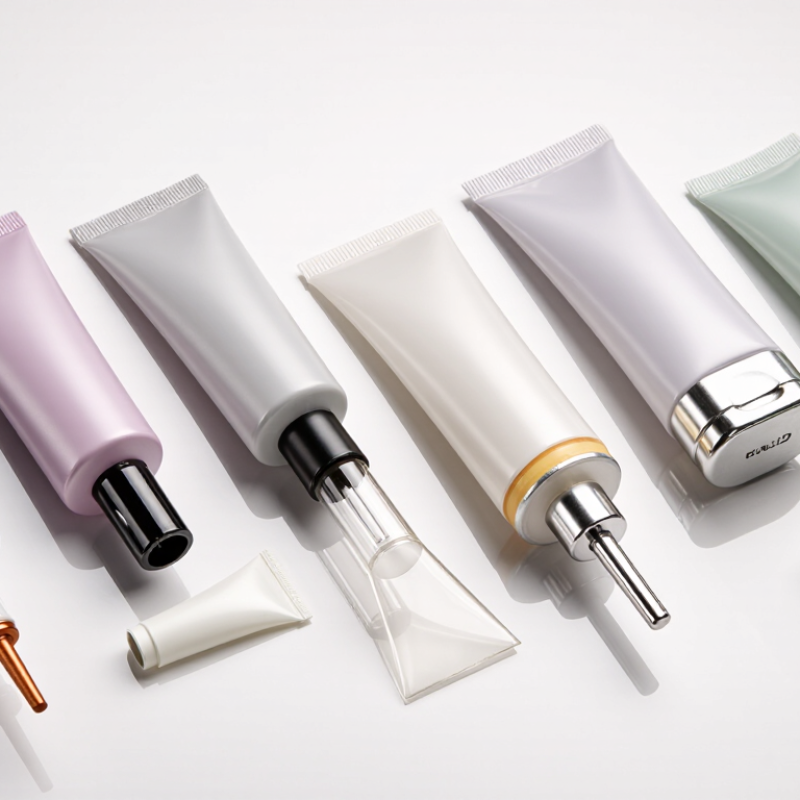
8 Applicator or Precision-Nozzle Tube Flexible PE or laminate tube fitted with a narrow nozzle, angled tip, roller, or massage applicator 5–100 ml Spot treatments, eye gels, lip products, scalp products, and targeted skincare Varies by tube body; the applicator can increase dispensing control but does not automatically improve barrier performance Precision nozzle, cannula-style tip, rollerball, massage head, or soft applicator Supports accurate application, targeted delivery, and differentiated user experience More parts can increase cost, cleaning requirements, and closure compatibility risk Eye care, blemish care, lip care, scalp treatments, and travel-size products
9 Mini Travel Tube Small PE, laminate, or aluminum tube designed for sampling, travel, kits, or promotional use 3–30 ml Creams, cleansers, masks, hand care, hair styling products, and trial formulas Depends on the selected material; smaller headspace can help reduce total product exposure Flip-top, screw cap, nozzle cap, and tear-off seal Low fill volume, convenient portability, and useful for sampling or introductory bundles Higher packaging-to-product ratio and limited space for decoration or mandatory information Discovery kits, hotel amenities, subscription boxes, and travel retail
10 Decorative Premium Tube PE, laminate, or aluminum tube with options such as matte coating, metallic finish, soft-touch coating, or offset printing 15–200 ml Most compatible creams, masks, lotions, primers, and color cosmetics after formula testing Determined mainly by the underlying tube material and any internal barrier layer Flip-top, screw cap, disc-top, nozzle cap, and custom-shaped closures Creates strong shelf impact and allows visual differentiation through shape, finish, and decoration Decoration can increase lead time, minimum order quantity, cost, and quality-control requirements Premium facial care, makeup primers, masks, gift sets, and elevated private label ranges
Selection guide: Choose the tube material according to formula sensitivity, viscosity, required dispensing control, target volume, decoration needs, sustainability objectives, filling process, and the recycling infrastructure available in the target market. Barrier performance, compatibility, shelf life, seal integrity, and transportation testing should be confirmed with the finished formula and complete package.